Martin Bormann
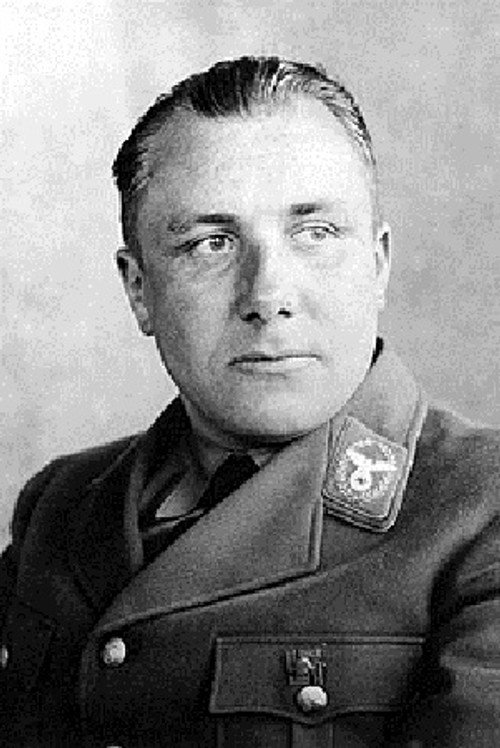
Martin Ludwig Bormann (June 17, 1900 – May 2, 1945) was a prominent figure within the Nazi Party, serving as the head of the Nazi Party Chancellery and as Adolf Hitler's private secretary. Bormann adeptly leveraged his role to wield significant influence, controlling information and access to Hitler, while establishing a complex bureaucratic system that allowed him to participate actively in decision-making processes.
Bormann's political journey began in 1922 when he joined a paramilitary Freikorps organization while managing a large estate. His early life included a prison sentence for involvement in a murder alongside Rudolf Höss, who later became the commandant of Auschwitz. He officially entered the Nazi Party in 1927 and joined the Schutzstaffel (SS) in 1937. Initially working in the party's insurance sector, he transitioned to become the chief of staff for Deputy Führer Rudolf Hess in July 1933.
By April 12, 1943, Bormann was appointed as Hitler’s personal secretary and took over Hess’s responsibilities following Hess's infamous flight to Britain in 1941. As Head of the Parteikanzlei, he had significant authority over civil service appointments and legislative approvals. He was notably a fierce advocate for reducing Christian influence and was instrumental in the oppressive policies against Jews and Slavs during the war.
As the Red Army encroached on Berlin in January 1945, Bormann returned to the Führerbunker. After Hitler's suicide, he attempted to flee the city but likely took his own life on May 2, 1945. Although his remains were initially unidentifiable, they were confirmed in 1973 and further validated through DNA testing in 1998. Bormann was tried in absentia at the Nuremberg Trials, found guilty of war crimes, and sentenced to death.